
Camping Food Safety: How to Pack a Cooler and Keep Food Cold
The 40°F rule, cooler packing, the 2-hour limit and safe camp cooking temperatures.
Quick answer
Keep perishable food at or below 40°F, and check it with an appliance thermometer. Pack drinks and food in separate coolers, keep the cooler full and in the shade, and do not let perishable food sit out more than 2 hours (1 hour above 90°F) (USDA).
Jump to section
The 40°F rule and the danger zone
Keep perishable food at or below 40°F. USDA's tip for summer outings is to put an appliance thermometer in the cooler so you can check, not guess (USDA). A cheap thermometer tells you more than the feel of the ice.
The reason is bacteria. They multiply rapidly between 40°F and 140°F, a range USDA calls the danger zone (USDA; University of Maine Extension). Food does not have to look or smell bad to be unsafe, and you cannot see the problem before it makes you ill.
At camp there is no fridge to fall back on. Everything you bring that is perishable lives in the cooler, so the cooler has to do the job a fridge does at home. That starts with the right one for the trip. Our guide to the best coolers for camping explains capacity, insulation and the maker claims to treat with care.
Ice, gel packs and frozen bottles
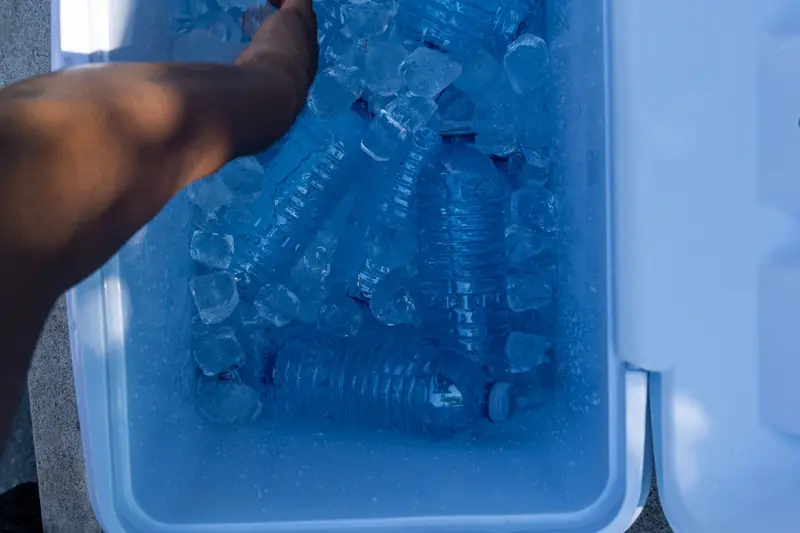
USDA lists three ways to keep food cold: ice, frozen gel packs, and drinks frozen solid (USDA). All three work, and you can use them together.
Frozen water bottles do double duty. They keep the cooler cold while they are frozen, and they become cold drinking water as they thaw. Gel packs stay dry and leave no meltwater. Loose ice fills gaps around odd shapes, but it leaves water at the bottom of the cooler.
Pack in layers and start cold. Chill the cooler before you load it, and pre-chill the food at home. Put the food you will eat last at the bottom, and the food you will eat first on top, so you spend less time with the lid open.
Here is a simple packing routine you can follow:
- Chill the cooler and the food before you leave.
- Put frozen items or ice at the bottom.
- Add food in the order you will use it, last meal first.
- Add more ice or frozen bottles to fill any gaps.
- Put an appliance thermometer on top, where you can read it.
- Close the lid and keep it closed except when you need something.
Two coolers: drinks and food
USDA advises packing drinks and perishables in separate coolers, because the drink cooler is opened often (USDA). Every opening lets warm air in and lets cold air out. If the drinks and the burgers share a cooler, the burgers pay for every thirsty person.
With two coolers, the drink cooler takes the abuse and the food cooler stays closed. If you only have room for one cooler, keep a small drink bin or a soft bag for the day's drinks and leave the main cooler for food.
The two-cooler method also helps with kids. Tell them which cooler is theirs, and which one stays shut. A food cooler that is opened a few times a day stays much colder than one that is opened every time someone wants a drink.
Shade and a full cooler
A full cooler stays cold longer than a half-full one, and coolers should be kept in the shade (USDA). Both rules have the same logic: less warm air inside, and less sun pushing heat in from outside.
If your cooler is only half full, fill the space. Extra ice, frozen bottles or even a towel can take up the air. Choose a cooler that suits the trip rather than the biggest one you can carry, and read how our cooler buying guide treats ice-retention claims.
Where you put the cooler matters too. Under a tree, under a table or under a tarp is better than in the sun or in a hot car. When you move to a new campsite, put the cooler in the shade first and set up the tent second.
The 2-hour / 1-hour rule
Perishable food should not sit out more than 2 hours, or 1 hour when the temperature is above 90°F. USDA adds: "When in doubt, throw it out" (USDA).
The clock runs from the moment food leaves the cooler or the heat. That includes time on the picnic table while the group decides what to drink, and time in the pot while you wait for the last person to arrive. Put leftovers back in the cooler quickly.
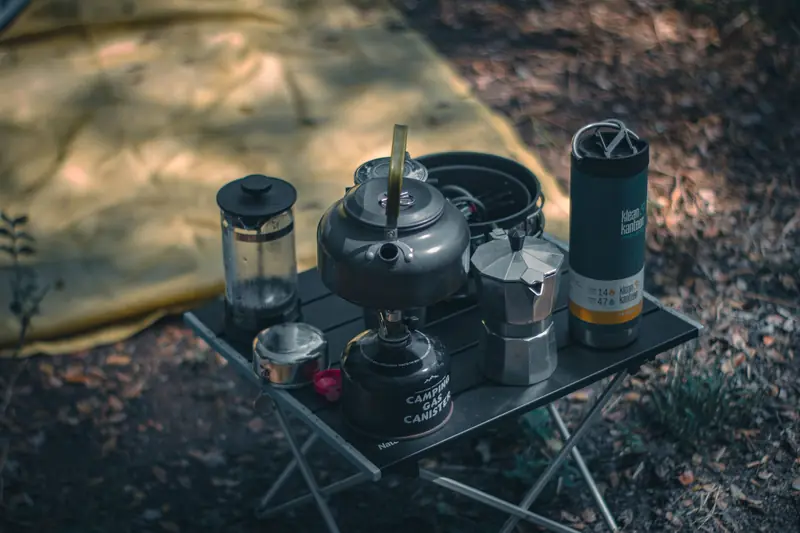
A camp kitchen helps you stay inside those limits. A stove with enough burners lets you cook and serve in one go. See our camp stove buying guide for burner count, output and wind protection.
Cooking temperatures at camp
Use a meat thermometer. The University of Maine Extension gives these camp cooking temperatures (University of Maine Extension):
| Food | Safe internal temperature |
|---|---|
| Steaks, roasts and fish | 145°F |
| Ground meat and egg dishes | 160°F |
| Poultry | 165°F |
Color is not a reliable test. A thermometer reading is. Clean the probe between raw and cooked food so you do not carry raw juices from one to the other.
A campfire or a camp stove can cook unevenly, so check the thickest part of the food. Cook outdoors only: never use a stove or charcoal in a tent, as our carbon monoxide guide explains.
Treating water from streams and lakes
Water from a stream or a lake is not safe to drink as it comes. The University of Maine Extension's method is to let sediment settle for 10 to 30 minutes, then bring the water to a rolling boil for 1 minute. At elevations above 6,500 feet, boil for at least 3 minutes, per CDC (University of Maine Extension).
If you carry water from home, treat it as the safe source and use the stream only if you must. Hydration is one of the NPS Ten Essentials, and the NPS advice includes bringing treatment supplies (NPS). Our camping checklist has the full list.
Gear that helps
-
Best Coolers for Camping
Compare capacity, build, drain plug and wheels so the cooler suits your trip.
-
Best Camp Stoves for Car Camping
A stove that cooks quickly helps you serve food within the time limits.
FAQ
How cold should a camping cooler be?
Keep it at or below 40°F, and USDA suggests putting an appliance thermometer in the cooler to confirm it (USDA).
How long can food sit out at a campsite?
Two hours at most, or just 1 hour once the temperature is above 90°F (USDA).
What temperature should camp-cooked chicken reach?
165°F for poultry, checked with a meat thermometer (University of Maine Extension).
Related
-
Buying guide
Best Coolers for Camping
Capacity, insulation, wheels and weight for camping coolers, with food-safety rules.
-
Buying guide
Best Camp Stoves for Car Camping
Burners, output, fuel and ignition for two-burner and single-burner camp stoves.
-
Comparison
Propane vs Butane Camp Stoves: Which Fuel to Choose
Canisters, cold weather, cost per cook, designs and safety, side by side.
-
Guide
Carbon Monoxide and Camping: Stoves, Heaters and Lanterns
Which camp gear makes carbon monoxide, the symptoms and where each can safely go.
-
Guide
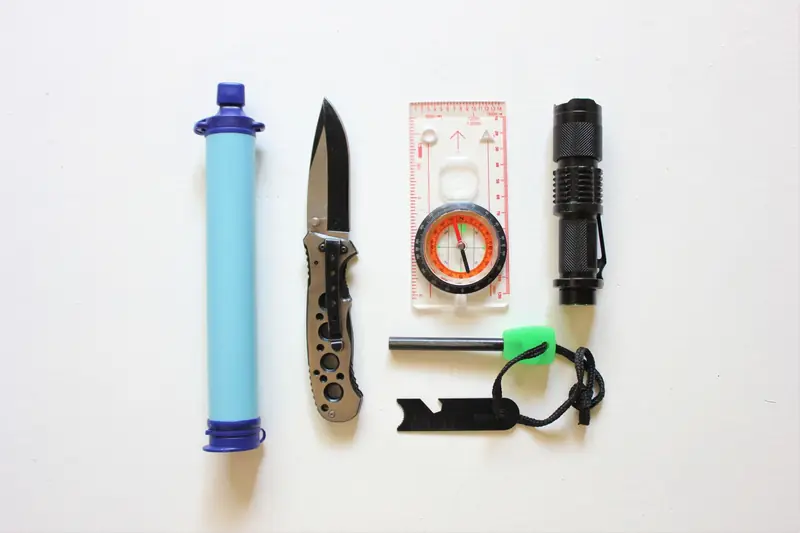
The Camping Checklist (Built on the NPS Ten Essentials)
The NPS Ten Essentials plus car-camping gear, sorted into a printable list.
-
Buying guide
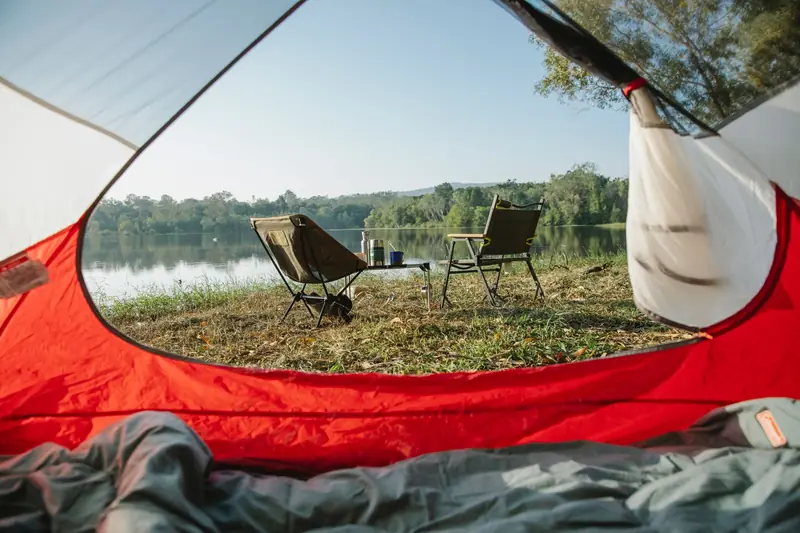
Best Camping Chairs
Weight rating, seat height, back support and packed size for camping chairs.

Get the Weekend Camping Checklist
A printable checklist covering the NPS Ten Essentials, the ratings to check on your sleep gear, safe cooler temperatures and the fire and carbon monoxide rules. No charge, and sized to hang on the fridge.