
Sleeping Pad R-Value, Explained (ASTM F3340)
What R-value is, why ASTM F3340 matters and how to compare pads.
Quick answer
R-value measures a sleeping pad's resistance to heat loss, and higher means warmer. Compare pads only when both state an R-value under ASTM F3340-18, the standard that makes ratings like-for-like. Sea to Summit calls a pad's "temperature rating" a manufacturer's guess, so rely on R-value (Cascade Designs; Sea to Summit).
Jump to section
What R-value measures
R-value is a number for thermal resistance, which means resistance to heat loss. Higher means warmer (Cascade Designs). On a camping trip, that heat loss goes into the ground. Cold earth pulls warmth out of you through the pad, and your sleeping bag cannot do much about it, because the fill under your body is squashed flat.
That is why the pad matters as much as the bag. A bag keeps warmth in around you, and a pad keeps the ground from taking it away from below. Two campers with the same bag can sleep very differently if one of them has a pad with a low R-value.
The number has no unit you need to remember. Think of it as a score: more is warmer, and you compare it with other pads on the same scale.
The ASTM F3340-18 standard and why it matters
A score is only useful if everyone measures it the same way. The standard that makes pad R-values comparable is ASTM F3340-18. Cascade Designs says Therm-a-Rest and other makers began developing it in 2016 (Cascade Designs).
ASTM describes F3340 as a standard that measures the thermal insulation (R-value) of camping mattresses. It was developed under ASTM committee F08 with the OIA/ASTM F08.22 task group, and it uses fixed hot and cold plate temperatures and defined compressive and inflating pressures (ASTM). In plain English, every pad is tested under the same conditions.
The practical result is the one you want when shopping. If two pads both state an R-value under ASTM F3340-18, you can compare them like for like. If a pad gives only a "temperature rating", you cannot. Sea to Summit calls that kind of rating "a manufacturer's guess – it is not tested", so the R-value is the reliable comparison (Sea to Summit).
Why some R-values changed
If you owned a pad before the standard arrived, you may notice that its R-value on a newer listing is different. That is not a mistake, and it does not mean the pad got colder.
Sea to Summit says it has used ASTM F3340-18 since January 1, 2020. Some R-values changed under the standard, and the maker says that reflects a different scale, not a change in warmth (Sea to Summit). A pad that was labeled one way with an older method may be labeled differently now because it was measured differently.
So when you read an old review or a secondhand listing, check which method produced the number. A figure from the old method and a figure from the new one are not on the same scale.
Foam, self-inflating and air pads
The three common pad types insulate in different ways, and they have different trade-offs for car camping.
| Type | How it works | Good to know |
|---|---|---|
| Foam | Closed-cell foam traps air and cannot deflate. | Bulky to carry but nothing to puncture. |
| Self-inflating | Open foam inside an airtight shell that fills itself. | Comfortable and easy to set up. |
| Air | Chambers filled by mouth, pump or built-in inflator. | Packs small and can be very warm, but depends on its valve and fabric holding air. |
Therm-a-Rest gives a rule of thumb for foam: roughly R-3 per inch of thickness. It also says that most older (pre-2000) air pads are below R-2 (Cascade Designs support). That second point is a reason not to assume that any air pad is warm. Check the number.
The same support page gives an example from the maker's own lineup: one air pad at R 4.5 weighing 13 oz and another at R 7.3 weighing 15.5 oz. It is one maker's range, but it shows that a much higher R-value does not always mean a much heavier pad.
Our sleeping pad buying guide lists the specs to compare, including R-value, thickness and valve type.
Women's pads and zoned insulation
Some makers sell women's versions of their pads. Sea to Summit says women's pads often have higher R-values than unisex versions because they have more insulation, and on self-inflating pads that extra insulation sits in the foot and torso zones (Sea to Summit).
So you may see two versions of the same pad with different numbers. That is a design choice, not a typo. If you sleep cold, a women's pad may suit you whatever your gender, but check the size and the R-value in the listing before you buy.
Zoned insulation means more warmth where the body loses the most heat, rather than the same amount everywhere. If a pad has zones, the single R-value on the label is still the one to compare with other pads, and the listing should say how it was measured.
Pads on cots and air mattresses
A cot lifts you off the ground, but it does not insulate you. Air circulates under the cot and carries warmth away, so on cold nights you still need a pad on top. Our camping cot buying guide covers weight ratings and fit.
If you need more warmth, you can stack pads. Therm-a-Rest says "the R-value of stacked pads is simply the sum of the R-value of the individual pads" (Cascade Designs). A foam pad under an air pad is a common way to add warmth to a thin air pad, and it also protects the air pad from rough ground.
Most air mattresses do not publish an R-value, so you cannot compare their warmth by number. Our air mattress vs sleeping pad comparison covers the differences in full. If you sleep on an air mattress in the cold, add a pad.
Choosing a pad for your season
We do not give a single R-value for each season, because the sources we rely on do not, and because your bag, your clothing and your tolerance for cold all matter. Use this method instead.
- Decide the coldest night you plan to camp in.
- Choose your sleeping bag first, using its ISO Comfort rating. Our temperature ratings guide explains how.
- Look for pads that state an ASTM F3340-18 R-value, and compare only those.
- Pick the highest R-value your trunk and budget allow for the cold nights, and a lower one for warm weekends.
- If a single pad is not warm enough, stack a second one under it and add the two R-values.
- Check the width, length and valve type so you are comfortable and can inflate it quickly.
For the bag half of your sleep system, see our sleeping bag buying guide.
Gear that helps
-
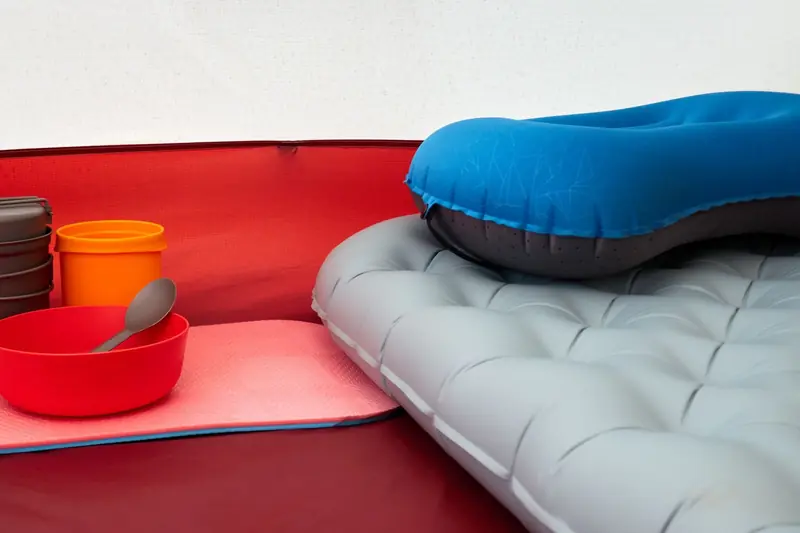
Best Sleeping Pads for Camping
Compare pads by R-value, thickness, type and valve.
-
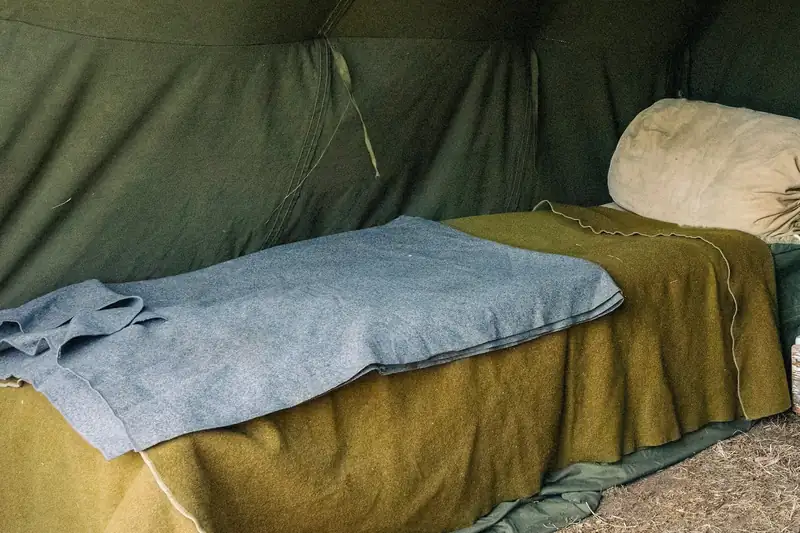
Best Camping Cots
A cot needs insulation under you, so pair it with a pad.
-

Best Sleeping Bags for Camping
The bag and pad work as one system, so choose them together.

FAQ
Can I add the R-values of two pads?
Yes. Therm-a-Rest says that stacked pads simply add up, with the combined R-value equal to the sum of each pad's (Cascade Designs).
How warm is a foam pad?
As a rule of thumb, Therm-a-Rest gives foam roughly R-3 for every inch of thickness (Cascade Designs support).
Why do some women's pads have higher R-values?
Sea to Summit says they often carry extra insulation, on self-inflating pads in the foot and torso zones (Sea to Summit).
Related
-
Buying guide
Best Sleeping Pads for Camping
ASTM R-value, thickness, type and size for foam, self-inflating and air pads.
-
Buying guide
Best Camping Cots
Weight rating, sleeping surface, height and tent fit for camping cots.
-

Comparison
Air Mattress vs Sleeping Pad for Camping
Insulation, comfort, size, pumps and cold-night performance, side by side.
-
Buying guide
Best Sleeping Bags for Camping
ISO Comfort and Limit ratings, fill, shape and zippers for camping sleeping bags.
-

Guide
Sleeping Bag Temperature Ratings, Explained (ISO 23537)
Comfort, Limit and Extreme in plain English, and how the test works.
-

Guide
The Camping Checklist (Built on the NPS Ten Essentials)
The NPS Ten Essentials plus car-camping gear, sorted into a printable list.
Get the Weekend Camping Checklist
A printable checklist covering the NPS Ten Essentials, the ratings to check on your sleep gear, safe cooler temperatures and the fire and carbon monoxide rules. No charge, and sized to hang on the fridge.